NGAZE Features
AI Visibility for Restaurants | Get Found on ChatGPT, Gemini & Perplexity
When a diner asks ChatGPT “best Italian restaurant in Austin” or triggers a Google AI Overview, does your restaurant appear in the answer? AI-powered search is reshaping how guests discover where to eat — and most restaurants are invisible in it. NGAZE’s AI Visibility tools build the signals that get your restaurant cited by ChatGPT, Gemini, Perplexity, and Google AI Overviews.
3
AI platforms tracked
60+
Citation sources
AI search engines draw on structured data, brand mentions, review signals, and knowledge graph entries to decide which businesses to recommend. NGAZE builds and reinforces these signals systematically — so your restaurant earns citations in AI answers when diners search for restaurants like yours.
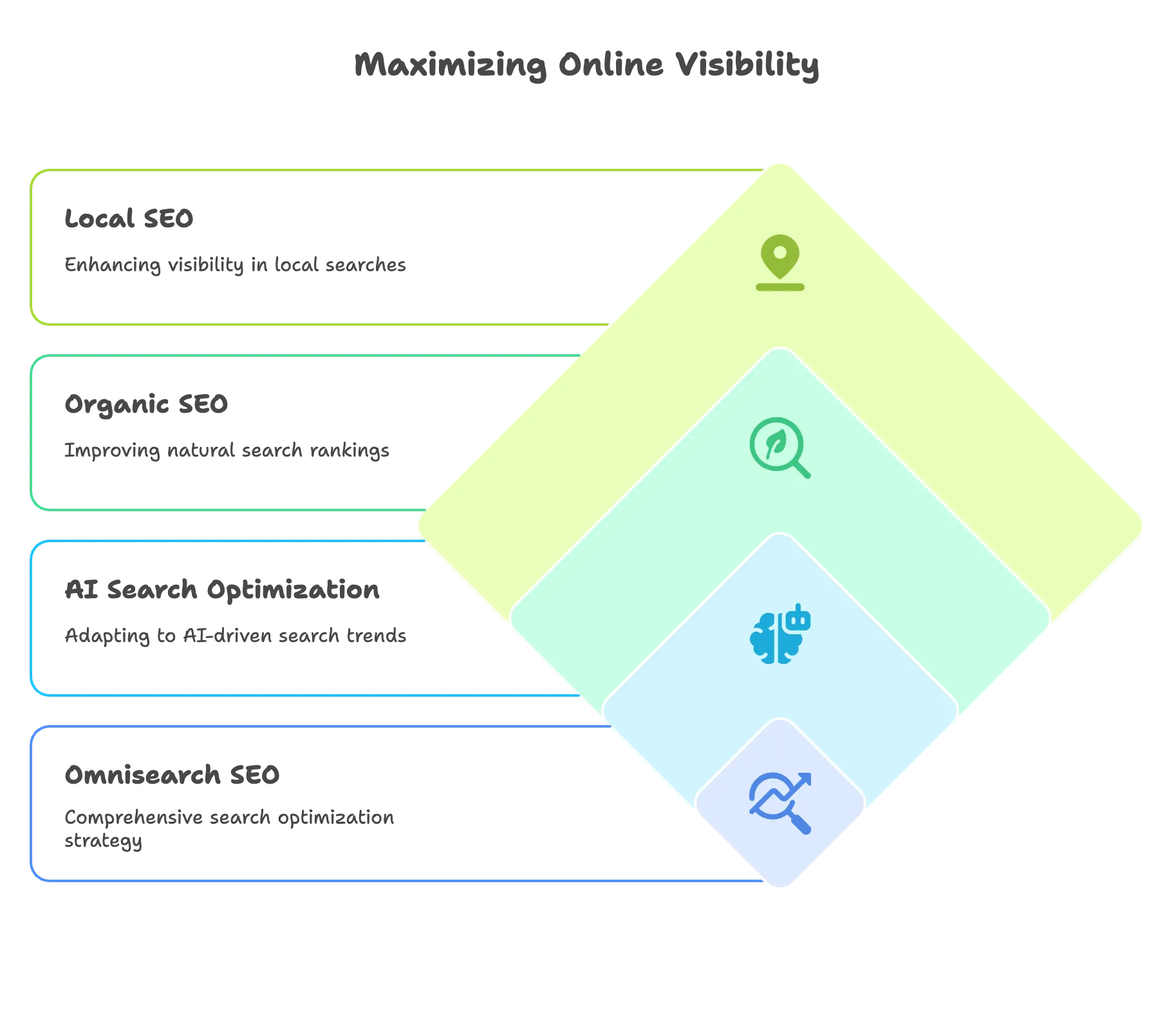
How NGAZE Builds AI Search Visibility
| Signal | What NGAZE Does |
|---|---|
| Structured Data / Schema Markup | Deploys and maintains Restaurant, Menu, Review, and LocalBusiness schema across your web properties |
| Knowledge Graph Optimisation | Ensures your restaurant entity is correctly established in Google’s Knowledge Graph |
| Brand Mention Monitoring | Tracks where your restaurant is cited online and identifies gaps where you should appear |
| Review Velocity Management | Maintains a steady stream of recent reviews — a key signal AI models use to validate businesses |
| NAP Consistency | Consistent business information across 60+ sources builds AI model confidence in your brand data |
| On-Site Entity Signals | Optimises page content so AI models associate your restaurant with the right cuisine, location, and attributes |
| AI Citation Tracking | Monitors whether your restaurant appears in ChatGPT, Gemini, and Perplexity responses for key queries |
How It Works
- Visibility audit — NGAZE assesses what AI models currently know about your restaurant and maps the gaps.
- Schema deployment — structured data is deployed or corrected across your website and digital properties.
- Signal reinforcement — review management and GBP signals are reinforced through the OmniSearch engine to strengthen AI model confidence.
- Monthly citation reports — track how often your restaurant appears in AI search responses and how that changes over time.
Ready to appear in AI search results?
See how NGAZE builds your AI visibility with a free personalised demo.
Get a Free Demo →Frequently Asked Questions
What is AI visibility for restaurants?
AI visibility refers to how often and how prominently your restaurant appears in answers generated by AI search tools like ChatGPT, Google AI Overviews, Gemini, and Perplexity. Unlike traditional SEO — which focuses on blue-link rankings — AI visibility is about being cited in conversational answers when someone asks an AI where to eat.
How does NGAZE help my restaurant appear in ChatGPT responses?
ChatGPT and similar AI models build their knowledge of businesses from structured data, review platforms, directory listings, and web content. NGAZE strengthens all of these signals — deploying schema markup, maintaining NAP consistency across 60+ directories, and managing your review velocity — so AI models have high-confidence, up-to-date information about your restaurant.
How is AI visibility different from regular local SEO?
Local SEO targets Google Maps and organic blue-link results. AI visibility targets conversational responses in AI tools — which draw on overlapping but distinct signals. Structured data and brand entity clarity matter more in AI search, while proximity and click signals matter more in traditional local SEO. NGAZE addresses both simultaneously.
How long does it take to appear in AI search results?
AI models update their knowledge on varying schedules. Structured data improvements and GBP updates can be reflected in Google AI Overviews within weeks. Appearing in ChatGPT or Perplexity responses typically takes longer as these models refresh their training data less frequently. NGAZE tracks citation frequency monthly so you can see progress.